Mar 21, 2026
How an AI Fitness App Solves Home Training Without Equipment
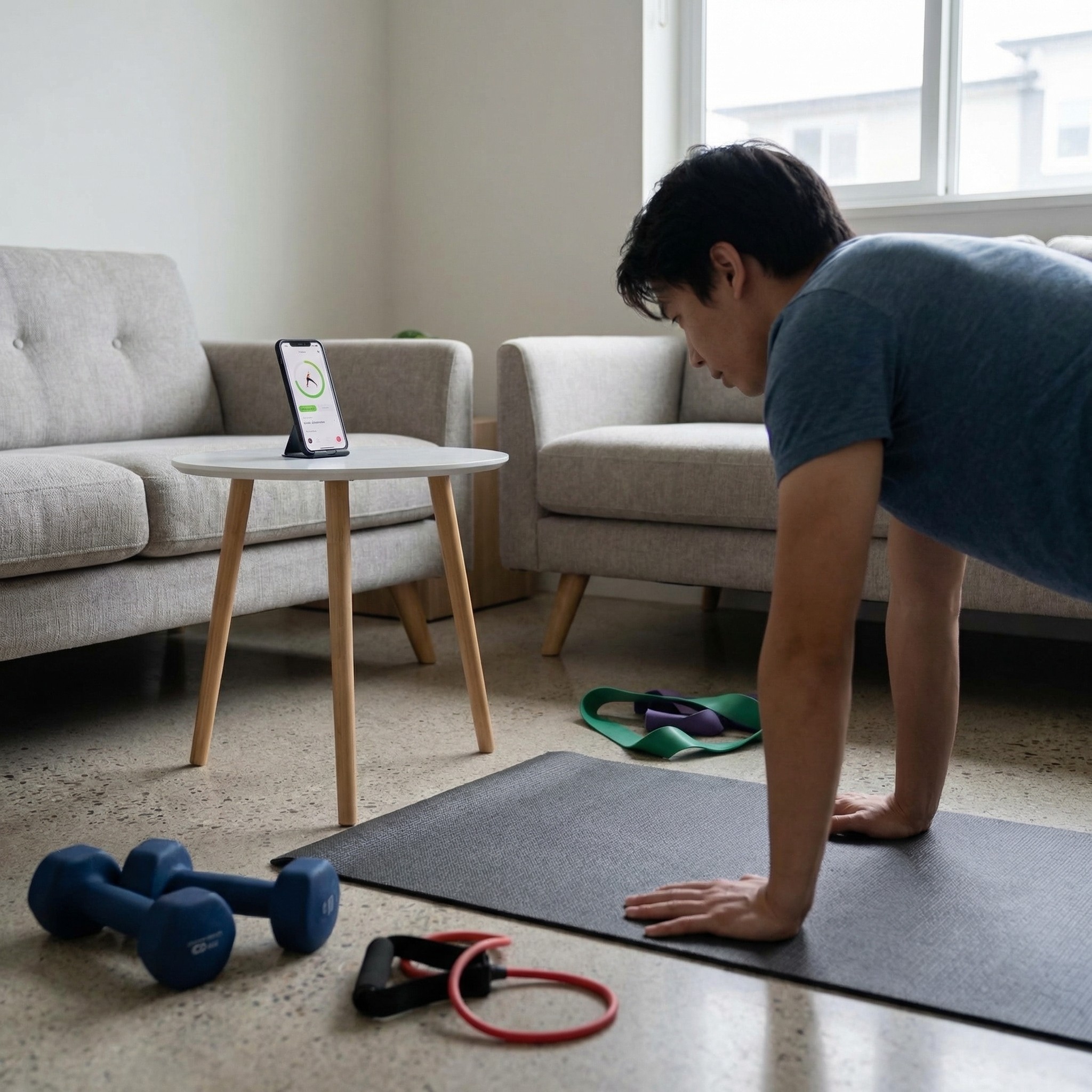
An AI fitness app uses adaptive algorithms to generate and adjust your training based on your equipment, schedule, and performance data. Unlike static apps, it responds to your real constraints, making structured progression possible without a coach.
Most fitness apps score around 3 stars despite massive libraries and well-funded teams — because content volume never solved a programming problem. The real gap is personalisation: an app that cannot read your equipment, your schedule, or your session history cannot coach you. Home trainers without adaptive AI waste months repeating the same stimulus with no progression logic behind it. This article breaks down exactly how AI fitness apps work and what to look for before you commit.
What an AI Fitness App Actually Does Behind Your Workout
If you train at home with limited equipment and no coach, the technology behind your programming matters more than the size of an exercise library. An AI fitness app is software that uses adaptive algorithms to generate, modify, and progress your training based on real inputs like your fitness level, available equipment, schedule, and session history.
That distinction is critical. A static workout app delivers the same plan regardless of context. It does not know whether you own a barbell or a single pair of dumbbells. It does not respond when you miss a session or plateau on a movement. An AI fitness app, by contrast, reads your constraints and adjusts programming continuously. It modifies reps, load progression, and exercise selection based on what you actually did, not what a template assumed you would do.
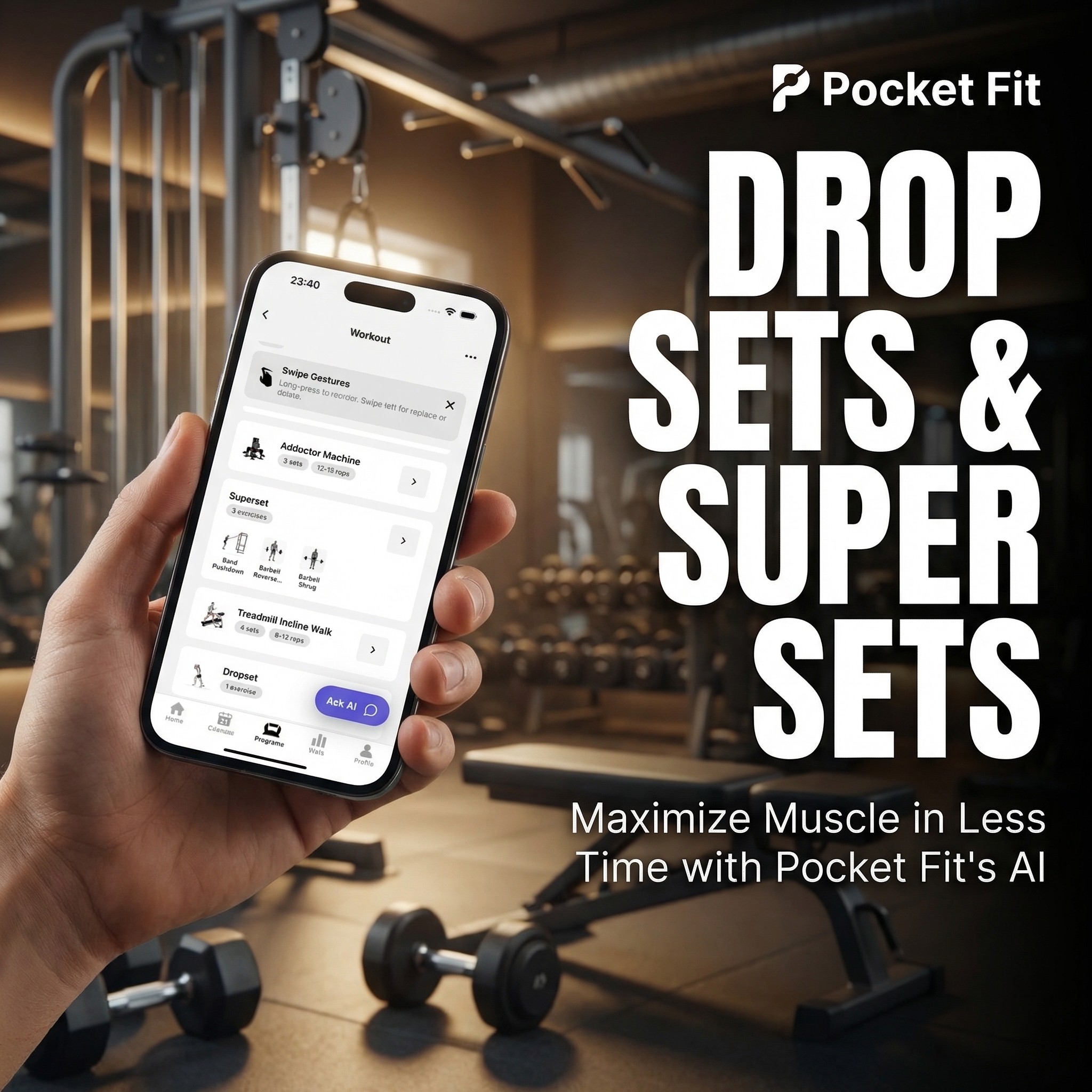
For the home trainer working with minimal equipment and variable time, adaptive programming is not a luxury. It is the baseline requirement for making progress without a coach standing in the room. Pocket Fit's AI-powered personalised workout programs are built on exactly this logic. From the first session, the system accounts for your fitness level, the equipment you have access to, and the schedule you can realistically commit to.
Why Most Fitness Apps Stall at Three Stars and What That Reveals
The Forbes Health roundup of the best fitness apps is one of the most visible lists in the space. And yet, most of the apps featured cluster around 3-star average ratings [1]. These are well-funded products with large marketing teams and massive exercise libraries. The ratings still disappoint.
The Real Rating Problem: most fitness apps optimise for content volume. They offer hundreds of workouts, video demonstrations, and category filters. The user still has to decide what to do, when to progress, and how to adapt when life gets in the way. That is not a content gap. It is a personalisation and progression gap.
This hits constraint-driven trainers hardest. If you are working out at home with minimal equipment, a library of 500 exercises means nothing when 400 of them require machines you do not own. Generic plans do not account for equipment gaps, unpredictable schedules, or the reality that you need to progress without a cable stack or a squat rack.
Low ratings across the market signal that users want something smarter. More videos will not solve the problem of not knowing what to do next. What matters is whether the AI fitness app you choose can think through your constraints and respond to your data.
How Real-Time AI Coaching Replaces the Guesswork in Home Training
The biggest problem for home trainers without a coach is the absence of a feedback loop. You finish a set and have no external signal telling you whether the weight was too light, whether fatigue is accumulating in a way that increases injury risk, or whether an exercise should be swapped for something more effective given your equipment.
Real-time AI coaching closes this loop. By reading your logged reps, sets, and weights, the system applies progression logic during and between sessions. It acts as an in-session decision-maker, adjusting the plan based on performance data rather than waiting for you to notice a problem weeks later.
Pocket Fit's injury-aware exercise adjustments and equipment-based exercise alternatives are practical examples of this intelligence. If you flag a shoulder issue or lose access to a piece of kit, the app resolves the constraint with a smarter substitution rather than simply flagging the gap and leaving you to figure it out. Without barbells, cables, or machines, home trainers need an AI that can engineer equivalent stimulus from whatever is available. This is a coaching intelligence problem, and content libraries alone cannot solve it.
Pro Tip: Before your next session, log your available equipment once. A well-designed AI fitness app should never give you an exercise you cannot perform.
The Hidden Mistakes Equipment-Light Trainers Make Without Adaptive Programming
Training at home with minimal equipment creates specific traps that generic programs do not address. These mistakes compound over weeks and months, and they are structural failures in programming rather than failures of effort.
Mistake: Repeating the Same Stimulus. Equipment-light trainers default to the same bodyweight exercises at the same volume because they do not know what else to do. Push-ups, squats, lunges, and planks on repeat. Without variation in movement pattern, tempo, or loading strategy, the body adapts and progress stalls. An adaptive AI program introduces variation based on your training history, not a random shuffle.
Mistake: Skipping Progressive Overload. Without a coach or a structured tracking system, most home trainers never systematically increase difficulty. They add more reps informally, which creates volume without structured overload. Progressive overload requires deliberate manipulation of load, tempo, or complexity, and AI-driven periodisation manages this automatically by analysing session data over time.
Mistake: Ignoring Recovery Signals. Generic plans assign fixed rest days based on a calendar template. They do not respond to accumulated fatigue, sleep disruption, or back-to-back high-intensity sessions. Adaptive programming adjusts scheduling and intensity based on actual session data, reducing burnout risk and keeping training sustainable across months rather than just the first few weeks.
Each of these mistakes is preventable when the system behind your training is designed to learn from your behaviour, not just assign workouts.
How to Evaluate an AI Fitness App Before You Commit
Choosing the right AI fitness app is a capability audit, not a feature comparison.
The question is not what the app offers on a marketing page. It is whether the system can think through your constraints and make intelligent decisions on your behalf. Before committing to any platform, run it through these five steps:
Does it ask about your equipment before generating a plan?
Can you customise training days, session duration, and weekly schedule?
Does it adjust exercises when you are injured or missing a piece of kit?
Does it track progression and surface meaningful analytics over time?
Can you amend individual workouts without abandoning the entire program?
These five questions map directly to the capabilities that separate a truly adaptive AI fitness app from a dressed-up exercise library. Program customisation, an AI-enhanced scheduler, injury-aware and equipment-based adjustments, advanced analytics, and the flexibility to amend workouts without starting over. These are the structural requirements for anyone training at home with limited equipment and no coach.
The three-star average across the market exists because most apps fail steps one through five. Pocket Fit was built specifically for the constraint-driven trainer who needs intelligence, not just instruction. If you want to run this evaluation yourself with zero risk, follow us on Instagram where you can claim a free 3-month membership and test every one of these capabilities before you commit to anything.
Conclusion
The three-star ratings across the market are not a coincidence. Most apps deliver content without coaching intelligence, and for home trainers with limited equipment, that gap costs real progress. An AI fitness app built on adaptive programming, injury-aware adjustments, and equipment-based logic gives you the feedback loop a static plan never can.
FAQ
What is the difference between an AI fitness app and a regular workout app? A regular workout app delivers fixed plans regardless of your equipment, schedule, or progress. An AI fitness app uses adaptive algorithms to continuously adjust your programming based on real session data, so the plan evolves as your circumstances and performance change.
Can an AI fitness app actually replace a personal trainer? For the majority of home trainers, yes. A well-designed AI fitness app replicates the core coaching functions: progressive overload, exercise substitution, schedule adjustment, and performance tracking. It cannot provide hands-on form correction, but it covers the programming and progression logic most people are paying a trainer for.
Do I need a lot of equipment for AI-personalised training to work? No. The value of adaptive AI is highest when equipment is limited. The system engineers equivalent training stimulus from whatever you have available, which means a pair of dumbbells and bodyweight exercises can still support structured, progressive programming over months.
How do I know if an AI fitness app is actually personalising my plan or just filtering exercises? Ask whether the app adjusts your plan after a missed session, flags a plateau, or substitutes an exercise when you report an injury or missing equipment. If it does none of those things automatically, it is filtering content, not coaching you.
Sources
["[1] Forbes Health - Best Fitness Apps roundup: https://www.forbes.com/health/weight-loss/best-fitness-apps/"]